Question 1
Choose the correct answer
How would a modeler refine a use case textual narrative?
- A. provide a detailed definition of the use case using a behavioral diagram
- B. specify all of the triggers preconditions, and post conditions for the use case
- C. specify all extension points for extend use cases and specify all secondary actors
- D. provide a complete textual description of the main flow and alternative/exceptional flows for the use case
Answer:
A
Comments
Question 2
Choose the correct answer.
Given the following diagram fragment: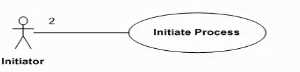
What does the multiplicity at the actor end mean?
- A. At most two Initiator actor instances can perform the use case
- B. Two Initiator actor instances are required to trigger the use case
- C. Two Initiator actor instances are required to participate in the use case.
- D. Multiplicities carry no meaning on use case diagrams
Answer:
C
Comments
Question 3
Choose the correct answer
How ate use cases and requirements used for requirements analysis in SysML?
- A. in a SysML model, either use cases or requirements are modeled, but never both
- B. Use cases are a relic from UML and are. strictly speaking, useless in a SysML model
- C. Use cases are good for capturing functional requirements. For nonfunctional requirements, the requirement element is needed
- D. Use cases are the basis for all requirements in a model. Requirements refine the use cases by adding additional information through then properties.
Answer:
C
Comments
Question 4
Choose the correct answer
How can the composition (black diamond) relationship be used to relate Requirements?
- A. Composition allows requirements to inherit properties and requirements relationships
- B. Composition allows role names to be assigned to sub-requirements thus providing a contextual reference
- C. Composition allows a particularly useful requirement to be reused by multiple higher level requirements or specifications
- D. Composition allows a requirement to be decomposed into sub-requirements as long as they don't add to or change the meaning of the original requirement.
- E. Requirements cannot use composition. They are not classifiers
Answer:
B
Comments
Question 5
Choose the correct answer
How is a testCase used to validate a requirement?
- A. The testCase model element can be used in SystvIL but it only applies to software
- B. Validation of a requirement can be indicated using a satisfiedBy relationship to a testCase
- C. Only the verdict model element (which can be a property of a testCase) can have a verifies relationship to a requirement.
- D. A requirement can have a vehfiedBy relationship to a testCase even if the test has not yet been conducted or even fully specified
- E. testCase is part of the UML Testing Profile and cannot be used with SysML.
Answer:
B
Comments
Question 6
Choose the correct answer
Which SysML construct is used in an activity diagram to associate an actor of a use case with the
actions that actor performs?
- A. an activity partition enclosing the actions the actor performs
- B. an action allocation of the actor to the actions that actor performs
- C. an association Between the actor and the actions that actor performs
- D. an object node to represent the actor and object flows tying that actor to the actions it performs
Answer:
D
Comments
Question 7
Choose the correct answer
Annex C of the SysML specification describes optional stereotypes that are useful for modeling
requirements. Which stereotype are all the other stereotypes based upon, and which properties
does it add to a requirement?
- A. «designConstraint», which adds a mandatory constraintProperty
- B. «emanagedRequirement», which adds properties for owner and changeAuthority
- C. «extendedRequirement», which adds properties for source, risk, and verifyMethod
- D. «penformanceRequirement». which adds properties for performanceMeasure and performance MeasureKind
- E. «synched Requirement», which adds properties for lastSynch. version, and corresponding ID in the requirements management tool
Answer:
D
Comments
Question 8
Choose the correct answer
How can the containment relationship be used to relate requirements?
- A. Packages may represent specifications, which can be contained m other specifications
- B. Containment allows a requirement to be decomposed by containing sub-requirements. Packages can also contain requirements
- C. Requirements can contain packages, which in turn can contain other requirements. This is how hierarchical specifications can be represented in SysML
- D. Requirements cannot use containment. They cannot contain any other model elements.
Answer:
B
Comments
Question 9
Choose the correct answer
What is the significance of the verify relationship?
- A. The verify relationship is restricted to relating a requirement to a testCase only.
- B. The verify relationship extends the refine relationship to specify how the requirement will be verified.
- C. The verify relationship is an extension of the satisfies relationship, relating a block to a verification activity.
- D. The verify relationship relates a requirement to some other model element such as a testCase. activity, or interaction that can prove the requirement has been satisfied.
- E. The verify relationship is used to prove. That the assertion of the satisfy relationship is true Thus, a verify relationship is meaningless without a corresponding satisfy relationship.
Answer:
B
Comments
Question 10
Choose the correct answer.
Given the following ibd fragment: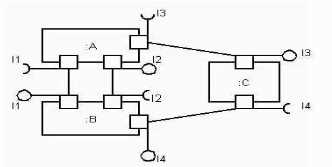
Select the bdd fragment that corresponds
A)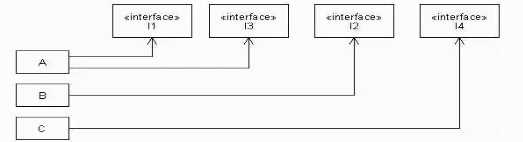
B)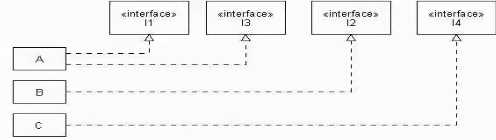
C)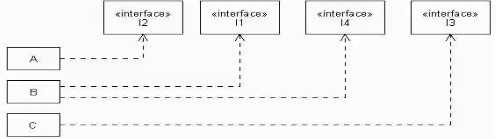
D)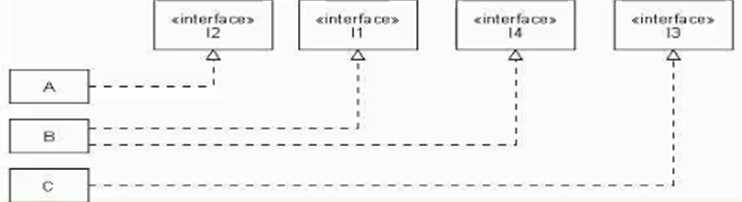
- A. Option A
- B. Option B
- C. Option C
- D. Option D
Answer:
A
Comments
Page 1 out of 8
Viewing questions 1-10 out of 90
page 2